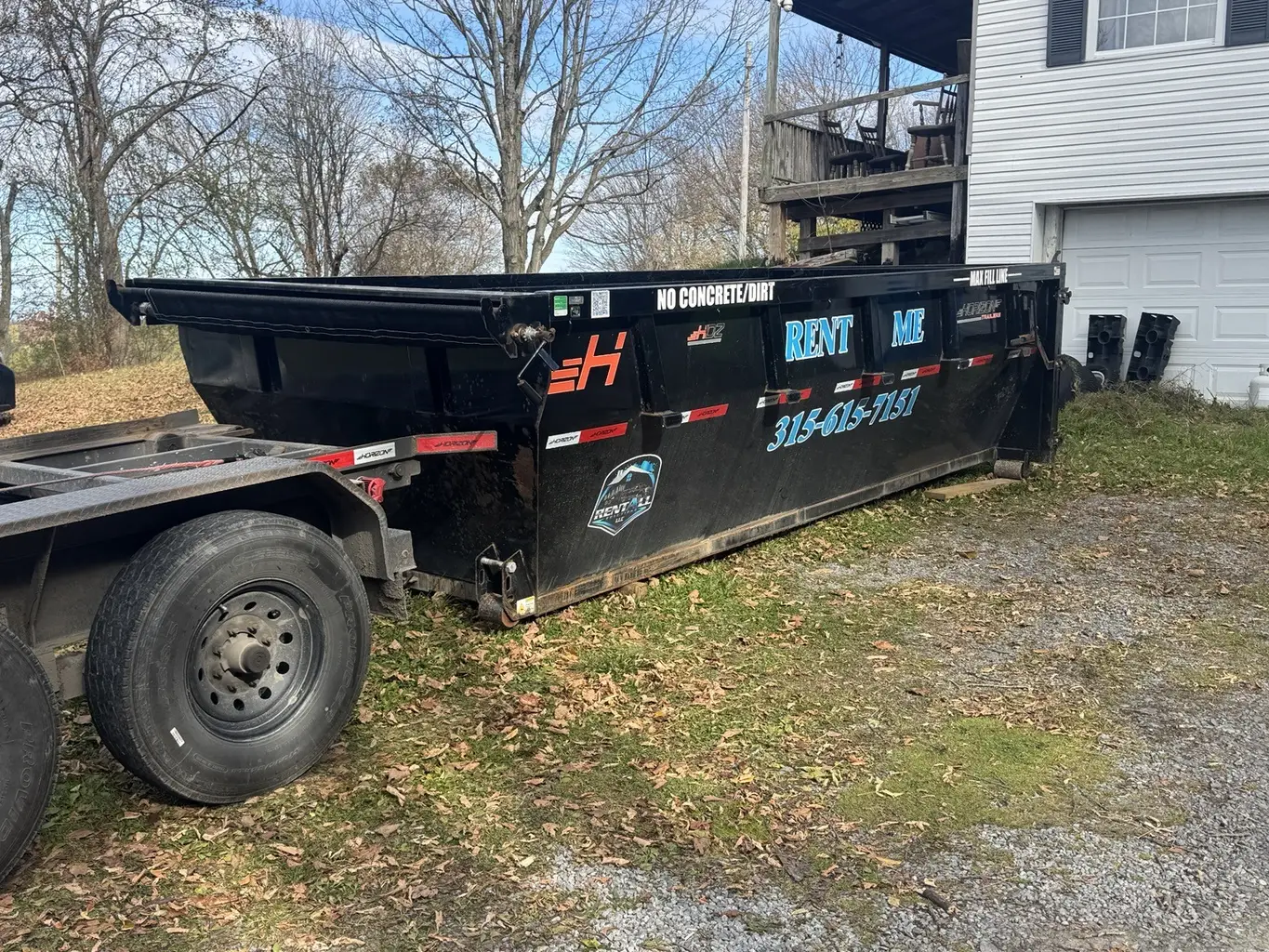
Choosing a Dumpster for Kitchen Remodel Debris

A kitchen remodel creates debris faster than most homeowners expect. One day, you are removing cabinet doors and old flooring. The next, you have boxes, trim, countertop scraps, packaging, and a growing pile that is blocking the garage or driveway. A dumpster for kitchen remodel work gives you one place to contain the mess while the project is moving.
For many Central New York kitchen projects, a 16-yard roll-off is a practical fit. It offers useful capacity without turning your driveway into a staging area for an oversized container. The goal is simple: keep debris contained, keep the work area safer, and avoid spending your weekend making repeated trips with a loaded pickup.
Why kitchen remodel debris adds up so quickly
Kitchen renovations are compact projects with a surprising number of materials. Cabinets may be bulky even after they are taken apart. Old flooring, drywall sections, baseboards, sinks, fixtures, and countertop material can add weight quickly. Then there is the steady stream of cardboard, protective wrap, and other packaging from new materials.
The issue is not just total volume. Kitchen debris is often awkward to stack. Long cabinet panels, boxy appliances, and pieces of trim can leave empty spaces if they are tossed in without a plan. A roll-off dumpster keeps that pile in one managed location rather than spreading it across the yard, garage, and curb.
A dumpster also helps the project stay on schedule. Contractors and homeowners can clear out demolition debris as they go instead of pausing work to decide where the next load will sit. For a rental-property turnover or a tight remodel timeline, that breathing room matters.
Is a 16-yard dumpster for kitchen remodel work enough?
It depends on the scope of the renovation and what else is being cleaned out at the same time. A 16-yard dumpster is commonly a strong choice for a kitchen remodel involving cabinet removal, flooring replacement, drywall, trim, and general construction debris. It is also useful when the remodel becomes a chance to clear an adjacent pantry, basement, garage, or rental unit.
If your project includes especially dense or heavy materials, weight matters as much as space. Countertop material, tile, masonry-type debris, and similar items can change the load quickly. Before booking, describe the project plainly and ask about the included weight, potential overages, and any disposal requirements that apply to your load. No guesswork is better than finding out after pickup that the dumpster was heavier than expected.
One 16-yard option can make the decision easier for first-time renters. Rather than sorting through a long menu of sizes, you can focus on the practical questions: Will it fit where you need it? What are you throwing away? How long will demolition and cleanup take? What weight is included in the rental package?
Plan delivery before demolition begins
The best time to schedule a dumpster is before the first cabinet comes off the wall. Once the kitchen is torn apart, debris has a way of taking over fast. Having the container in place lets you load as materials come out, keeping pathways clearer and reducing the temptation to make an unstable pile beside the house.
Think through placement before you book. A driveway is often the most convenient location because it provides close access to the kitchen while keeping the dumpster off the street. Choose a spot that gives workers room to carry materials safely and leaves enough access for vehicles, garage doors, or deliveries if needed.
Protect the surface and consider the route, not just the final location. If you are concerned about a driveway, discuss property aware placement before delivery. Also look up for low branches or wires and make sure the approach is clear. A few minutes of planning can prevent a difficult adjustment on delivery day.
If your project schedule changes, communicate early. Remodels do not always follow a clean calendar, especially when materials arrive late or an unexpected repair is found behind a wall. A local provider can give you direct guidance on scheduling, extensions, and whether same-day delivery may be available.
Load the dumpster efficiently and safely
A properly loaded dumpster holds more and is easier to manage. Start with the heavy, flat materials on the bottom. Break down cabinet boxes and other bulky items when practical. Place long pieces along the sides, then fill open spaces with smaller debris. This keeps the load more stable and helps you use the container's capacity instead of building one large mound in the center.
Keep materials below the top edge of the dumpster. Overfilled containers can create a safety issue and may not be ready for transport. If you are nearing the top sooner than expected, pause and reassess what is left. It is better to ask about options than to create an unsafe load.
Do not treat the dumpster as a catch-all without checking the disposal terms first. Waste rules can vary by material, and some items may be restricted or require special handling. Review the accepted-material guidance before loading, particularly if the kitchen cleanup includes old appliances, paint, chemicals, electronics, or anything you are unsure about.
For homeowners doing the work themselves, keep a clear walking path between the kitchen and dumpster. For contractors, designate one person to keep an eye on the load as the day progresses. That small bit of organization reduces tripping hazards and keeps reusable materials or items meant for donation from accidentally being tossed.
Match the rental period to the real project timeline
A kitchen remodel rarely ends the moment demolition is complete. You may need a few extra days for final trim work, packaging from new cabinets or appliances, punch-list repairs, and the last sweep-out. Booking only for the demo phase can leave you with nowhere to put the final debris.
At the same time, there is no reason to keep a dumpster longer than the project needs. Ask about the standard rental period and the cost of an extension before you book. Clear terms around rental length, included weight, overages, and any additional charges help you budget with confidence.
If you are managing a contractor, coordinate dumpster timing with the demolition crew and installation schedule. If you are tackling the remodel yourself, build in a little cushion. A realistic schedule is usually less stressful than trying to load everything during one rushed weekend.
Questions to ask before booking a kitchen remodel dumpster
Before placing your order, make sure you have answers to the details that affect the job. Confirm where the dumpster will sit, when you want it delivered, how long you expect to need it, and what type of debris you plan to load. Ask what weight is included and how overage charges are handled.
It also helps to confirm the pickup process. Know whether the container needs to be accessible at a certain time and whether anything must be moved before pickup. Clear communication upfront keeps the end of the project as straightforward as the start.
For landlords and property managers, these questions are especially useful between tenants. A kitchen turnover can involve old contents, damaged finishes, maintenance debris, and new-material packaging all at once. A single container can simplify cleanup, but only when the rental terms and loading plan match the actual work.
Keep the cleanup from slowing down the remodel
A dumpster is not the exciting part of a new kitchen. It is the part that keeps old materials from becoming a problem while you work toward the finished space. With the right placement, a realistic timeline, and clear disposal guidance, cleanup stays organized from the first demolition day through the final sweep.
RentAll Solutions LLC provides straightforward 16-yard roll-off dumpster rentals for homeowners, landlords, remodelers, and contractors in Central New York. Call or text with the details of your kitchen project, get the terms clear before delivery, and keep the debris from taking over the job. Bin There, Dump That!


Comments